
 One of the most common questions we receive is how to take care of an alpaca toy to ensure it lasts a lifetime.
It is important to know that washing instructions for alpaca fur toys are different from synthetic plushies.
One of the most common questions we receive is how to take care of an alpaca toy to ensure it lasts a lifetime.
It is important to know that washing instructions for alpaca fur toys are different from synthetic plushies.
Alpaca Fur Toys
are not machine washable. Because eachalpaca toy made with alpaca fur
is a natural product, we recommend the following gentle cleaning method:Cleaning & Drying
- Avoid harsh chemicals: Do not dry clean or wash with soap, as these will strip the natural oils that keep your alpaca fur teddy bear soft and shiny.
- Gentle wiping: Instead, wipe gently with a damp, white muslin cloth. Move left, right, up, and down to remove surface dust.
-
Water exposure: Try not to get the leather wet; only wipe the fur. If your
Alpaca Fur Teddy Bear
gets soaked (for example, in the rain), blot it with a towel immediately. -
Drying process: Dry your
Alpaca Fur Toys
naturally. Keep them away from direct heat sources like radiators, or the leather may go stiff and the fur crispy. It will take about 24 hours to air dry properly. - Important: Do not tumble dry and do not iron.
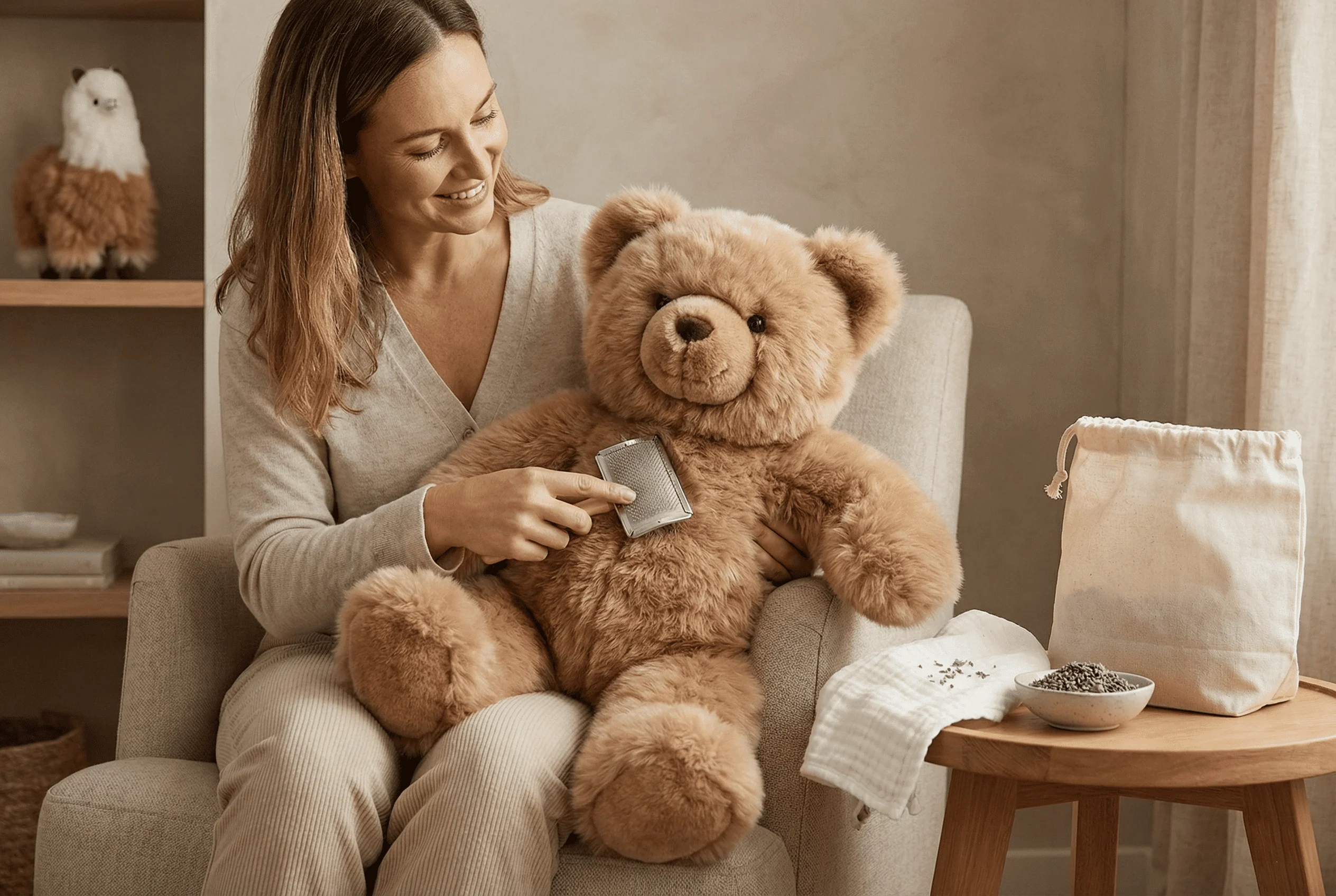
Brushing: How to fix stuffed animal hair
Over time, you might wonder how to fix stuffed animal hair that has become matted. A light brush will leave your
Peruvian Alpaca Teddy Bear
as luscious as the day it arrived.- Tools: Use a tight-bristled tangle brush, a ball-end plastic bristle hair brush, or a pet "slicker" brush. The slicker brush works well to pick up particles and fluff up the fiber.
- Technique: Brush gently to separate the hair shafts and make them stand independently. Once dry after cleaning, you can also use a cold hairdryer jet to fluff it up.
Storage
- Before storing, make sure that the alpaca fur stuffed animal is fully dry.
-
In some climates, moths could cause a problem. If this is your case, place your
Alpaca Ornaments
in plastic bags with small scented sachets or cedar chips. - Sachets using dried lavender are also useful for preservation.
- Note: We do not recommend the use of mothballs due to the strong odor.