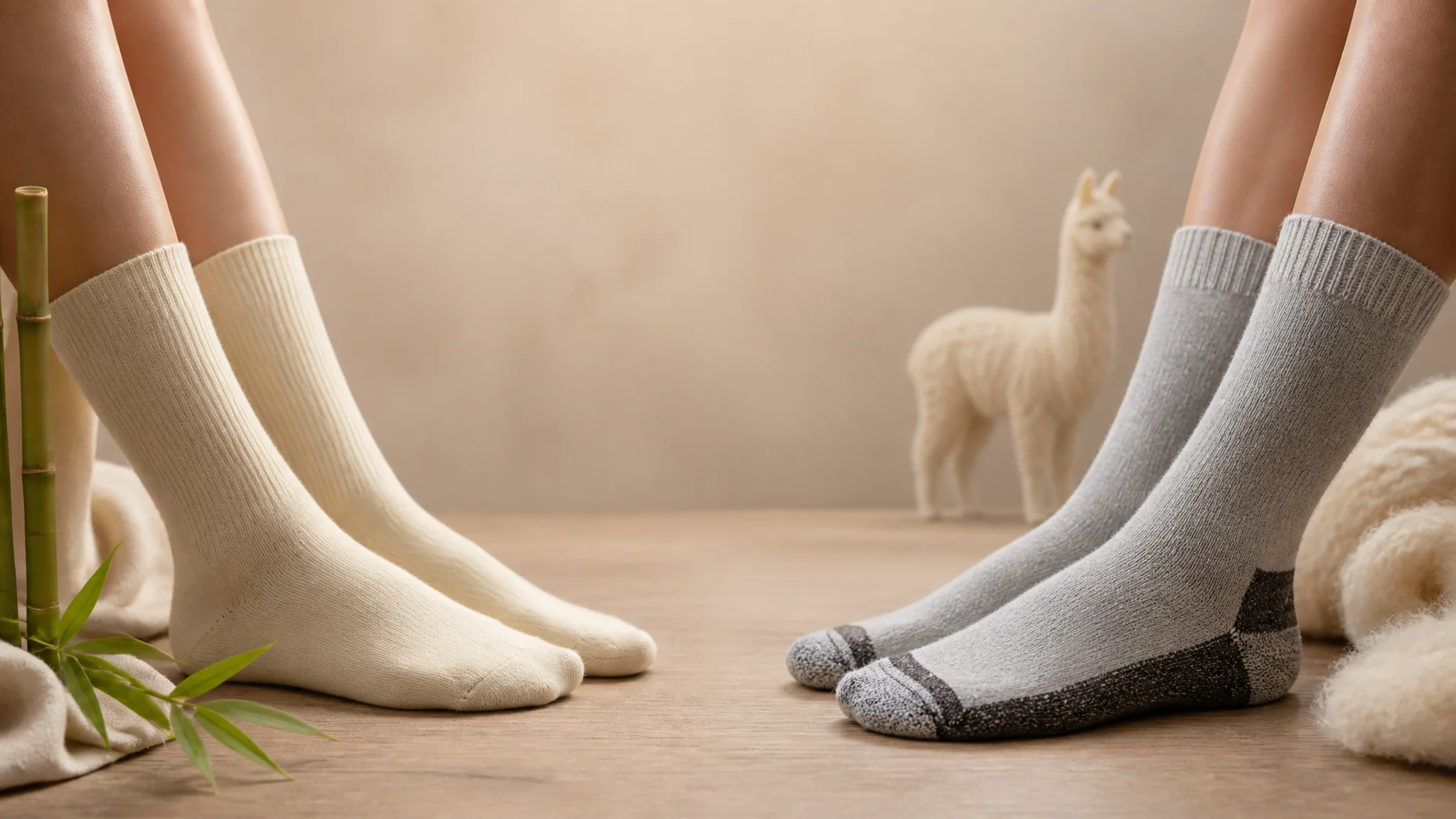
When winter's chill begins to bite, keeping your feet cozy and comfortable is the first line of defense against the cold. If you are standing in front of your winter wardrobe choosing the best protection for your feet, you might wonder: are alpaca socks warmer than wool? While traditional sheep's wool has historically been the standard fiber for cold-weather accessories, alpaca fiber has emerged as an exquisite, high-performance alternative. In this comprehensive comparison, we delve deep into the exceptional science and natural luxury of these fibers to determine which truly reigns supreme for your winter comfort.
Quick Takeaways: Why Alpaca Wins
- Superior Thermal Efficiency: Hollow-core fibers trap more warmth with less bulk.
- Outstanding Moisture Control: Naturally repels wetness, maintaining insulation even when damp.
- Hypoallergenic Comfort: Free of lanolin, making them completely itch-free and gentle on sensitive skin.
- Exceptional Softness: Smooth microscopic scales resemble cashmere for unparalleled luxury.
Why Are Alpaca Socks So Warm?
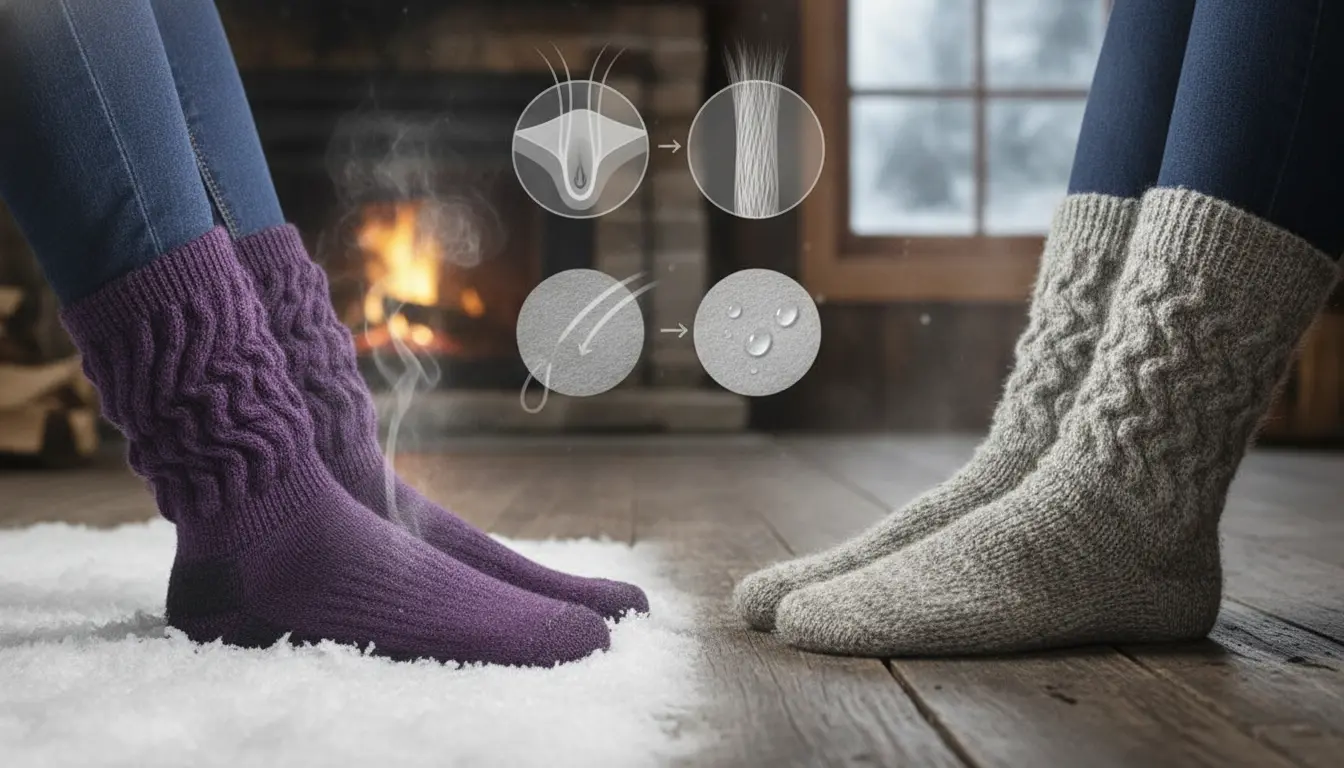
To fully appreciate why Alpaca Socks possess such legendary insulating properties, one must look closely at the microscopic structure of the fiber itself. Unlike sheep's wool, which features a solid core, alpaca fiber contains tiny, hollow air pockets. These microscopic chambers act as a natural thermal barrier, trapping body heat and reflecting it back toward your skin while simultaneously keeping cold ambient air out.
This unique biological structure is an evolutionary marvel, developed by alpacas over millennia to survive the extreme temperature fluctuations of the high-altitude Andean plains, where scorching daytime heat quickly transitions into freezing nighttime cold. When assessing how warm are alpaca socks, this natural air-cavity insulation is the primary reason they outperform almost all other natural fibers on earth. Furthermore, because these hollow spaces reduce the overall density of the fiber, alpaca socks provide extraordinary warmth without the heavy, stifling bulk associated with traditional winter hosiery.
Alpaca vs Wool Socks: Which Is Warmer?
When directly compared side-by-side, alpaca fiber offers a warmth-to-weight ratio that easily surpasses that of standard sheep's wool. Studies have shown that alpaca fiber is up to three times warmer than sheep's wool of equivalent weight. Merino wool, while celebrated for its relative softness and performance, still features solid-core fibers that require a thicker spin to achieve the same level of insulation as alpaca.
If you are questioning whether are alpaca socks warm enough for extreme climates, the answer lies in their thermodynamic versatility. Because they insulate so efficiently, a medium-weight alpaca sock will easily match or exceed the warmth of a heavy-weight wool sock, allowing for greater freedom of movement and a more comfortable fit inside slim-profile footwear, hiking boots, or elegant leather shoes.
| Feature | Alpaca Socks | Standard Wool Socks |
|---|---|---|
| Insulation Type | Hollow-core fibers (highly efficient air trapping) | Solid-core fibers (air trapped between fibers only) |
| Warmth-to-Weight | Extremely High (up to 3x warmer than wool) | Moderate to High |
| Moisture Absorption | Low moisture regain (~8%), highly hydrophobic | High moisture absorption (~30%), holds onto dampness |
| Softness / Feel | Silk-like, low scale height (completely itch-free) | Can feel prickly due to higher, jagged fiber scales |
| Lanolin (Allergens) | 100% Lanolin-Free (Hypoallergenic) | Contains lanolin (common skin irritant) |
Which Material Manages Moisture Better?
Warmth is not just about keeping the cold out; it is equally about managing the moisture your body produces. Feet naturally sweat, even in freezing temperatures. If your socks absorb that moisture and retain it, your feet will quickly become cold, damp, and uncomfortable. This is where the hydrophobic nature of alpaca fiber provides a dramatic advantage.
While sheep's wool can absorb up to 30% of its own weight in water before feeling wet, it tends to hold onto that moisture, slowing down evaporation and causing a chilling effect once you stop moving. Alpaca fiber, by contrast, has an incredibly low moisture regain rate of only 8%. Instead of absorbing moisture into the core, it wicks sweat away from the skin instantly, allowing it to evaporate rapidly. This ensures your feet remain completely dry, fresh, and biologically warm throughout the day, preventing blisters and eliminating the damp environments where odor-causing bacteria thrive.
Alpaca vs Wool Socks for Softness and Comfort
For many, the biggest drawback of traditional wool is the dreaded "itch factor." Standard wool fibers have highly pronounced, jagged scales that rub against the skin, causing irritation. Many outdoor enthusiasts ask: are alpaca wool socks warm but also comfortable to wear all day? The answer is an absolute yes.
Alpaca fibers are exceptionally smooth, with flatter, less prominent microscopic scales. This creates a silk-like texture that glides gently over the skin, earning alpaca its historical title as "The Fiber of the Gods." At Classic Alpaca, we meticulously select the finest fibers to craft socks that feel like pure luxury. Furthermore, because alpaca is naturally free of lanolin—the oily substance found in sheep's wool—our socks are completely hypoallergenic, making them the perfect choice for individuals with sensitive skin or wool allergies.
Which Socks Are More Durable and Easier to Care For?
In addition to warmth and comfort, a premium sock must stand the test of time. Alpaca fiber boasts incredibly high tensile strength, making it naturally resilient against friction and wear. Unlike sheep's wool, which can break down over time under the repetitive stress of walking, alpaca fibers maintain their structural integrity, ensuring your favorite pair retains its shape and cushion for years.
Caring for your luxury hosiery is simpler than you might think. Because alpaca fiber is naturally odor-resistant and anti-bacterial, you do not need to wash them after every single wear—often, a simple airing out is all that is required. When it is time to clean them, a gentle wash in cool water with a mild detergent and laying them flat to dry will preserve their exquisite softness and loft, making them an enduring investment in your daily comfort.
Are Alpaca or Wool Socks Better for Cold Weather?
When the temperature drops, the ultimate victor is clear. While wool remains a respectable and classic option, alpaca stands alone as the supreme material for cold-weather protection. Its hollow-core insulation, superior moisture-wicking capability, featherlight weight, and rich, hypoallergenic softness make it the gold standard for anyone seeking comfort in freezing conditions.
Whether you are braving a snowy mountain trail, commuting through chilly city streets, or simply relaxing by a cozy fireplace at home, alpaca socks elevate your winter experience to new heights. If you are ready to experience this natural luxury firsthand, explore the premium selection of Alpaca socks for sale at Classic Alpaca and step into a world of warmth, breathability, and unparalleled comfort today.