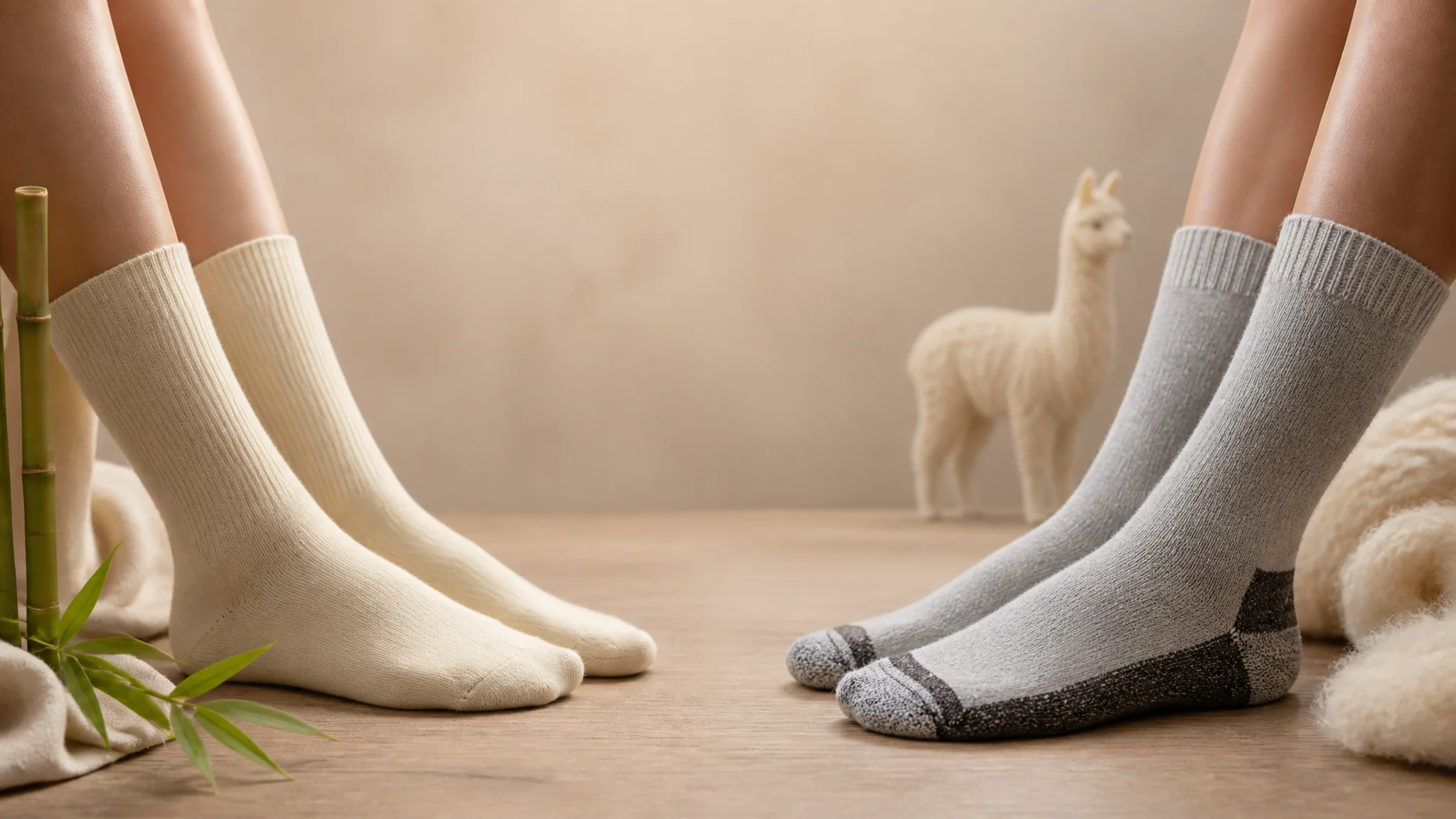
When the temperature drops or a long day on your feet awaits, the foundation of your daily comfort lies in what you wear on your feet. Choosing the perfect pair of socks is no longer a mundane task; it is an investment in wellness, performance, and everyday luxury. In the quest for ultimate comfort, the comparison of bamboo vs alpaca socks has emerged as a major point of interest for textile connoisseurs. While both materials claim superiority over traditional cotton and synthetics, they offer vastly different experiences. At Classic Alpaca, we believe in the transformative power of premium natural fibers. Let us dive deep into this material showdown to discover which sock truly deserves a primary spot in your wardrobe.
Bamboo vs Alpaca Socks for Warmth
When it comes to cold-weather performance, the structural differences between bamboo and alpaca fibers become immediately apparent. Alpaca fiber is legendary for its thermal efficiency. Originating from the high-altitude Andean highlands, alpacas have evolved to survive extreme temperature fluctuations. Their fleece contains semi-hollow medulla fibers, which create microscopic pockets of trapped air. This natural architecture acts as a highly effective thermal barrier, locking in body heat while keeping the cold ambient air out.
In contrast, bamboo socks are made from viscose or rayon fibers derived from bamboo pulp. While bamboo fabric is exceptionally smooth, it possesses no inherent thermal-insulating structure. It is a solid, processed fiber that tends to mimic the ambient temperature. When you wear bamboo socks in freezing weather, they fail to retain heat efficiently, often leaving your toes cold and uncomfortable. For winter sports, crisp autumn hikes, or chilly evenings at home, alpaca fiber provides unmatched warmth that bamboo simply cannot replicate.
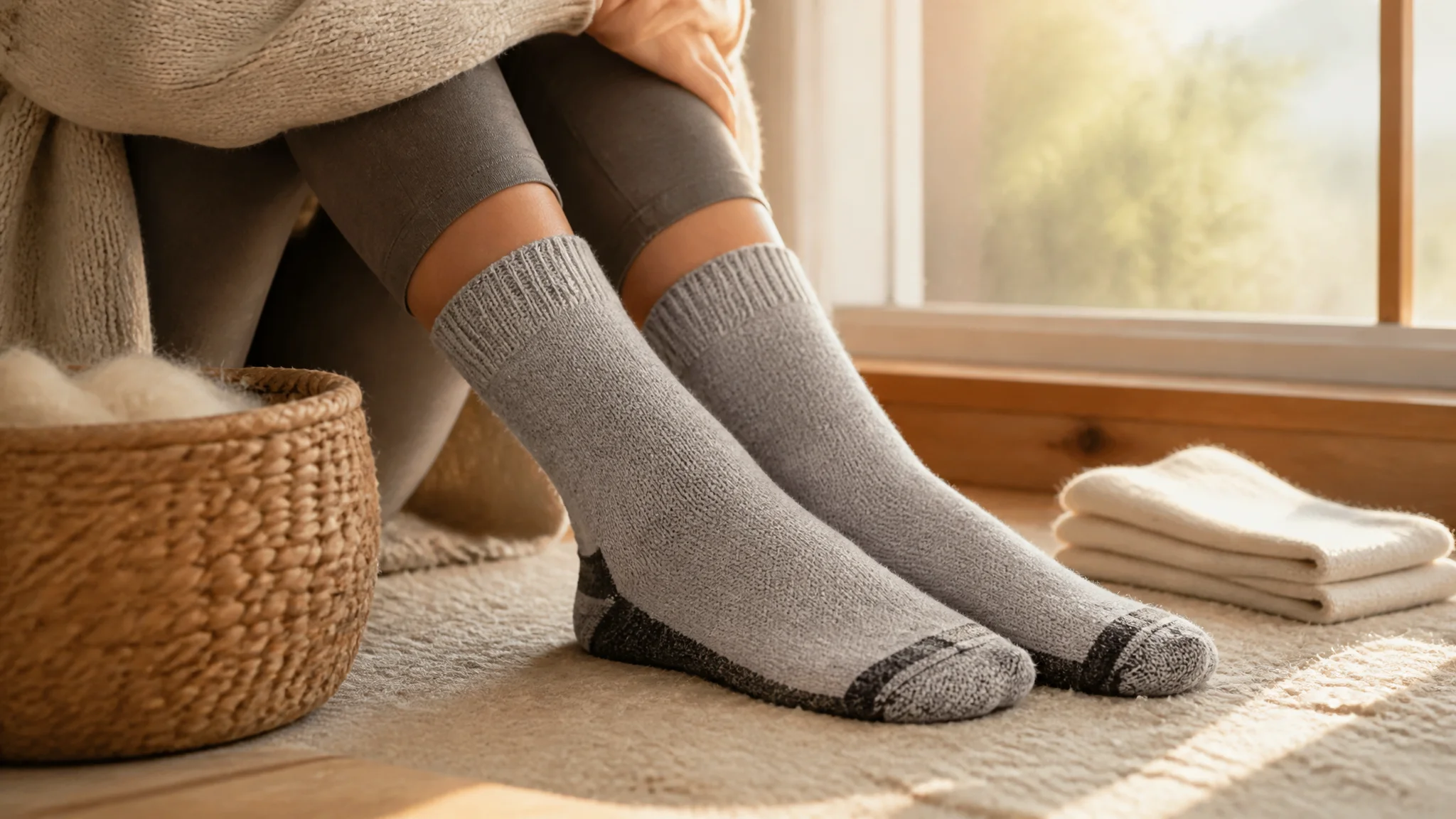
Which Socks Are More Breathable?
Breathability is crucial for foot health, preventing that claustrophobic, sweaty feeling that leads to blisters and discomfort. Both bamboo and alpaca are praised for their breathability, but they manage airflow and body heat differently.
Bamboo socks excel in hot, humid conditions. Because the fabric is thin and lightweight, it allows air to circulate freely around the foot, making it feel cool to the touch. It is an excellent choice for casual summer wear when insulation is not a requirement.
However, alpaca fiber offers a highly sophisticated form of breathability known as thermoregulation. The hollow core of alpaca fibers does not just trap warmth; it also facilitates active vapor transmission. If your feet begin to overheat, the fibers release the trapped warm air, allowing your skin to breathe and cool down naturally. This makes alpaca socks highly versatile across all seasons—keeping you cozy in the winter and surprisingly cool and dry during summer excursions.
Bamboo vs Alpaca Socks for Moisture and Odor Control
Feet have a high concentration of sweat glands, making moisture and odor control a critical metric for premium footwear. When evaluating bamboo vs alpaca socks in this category, we must look at how each material handles liquid moisture and sweat-born bacteria.
Bamboo is highly absorbent—it can absorb up to four times its weight in water. However, bamboo viscose tends to hold onto that moisture. Once a bamboo sock becomes saturated, it stays damp for a long time, which can lead to skin friction, blisters, and cold feet. Furthermore, while raw bamboo plants contain a natural antimicrobial agent called "bamboo kun," most of this benefit is lost during the intensive chemical rendering process required to turn tough bamboo wood into soft viscose yarn.
Alpaca fiber, on the other hand, is naturally hydrophobic (water-repelling). Instead of soaking up moisture into the core of the fiber, alpaca wicks sweat away from the skin's surface, allowing it to evaporate rapidly. This keeps your feet remarkably dry, even during intense physical activity.
Additionally, alpaca is naturally highly resistant to odor-causing bacteria. Because alpaca fibers do not contain lanolin (the heavy grease found in sheep's wool) and dry out quickly, bacteria do not have the damp, oily environment they need to multiply. You can wear a high-quality pair of alpaca socks through multiple days of hiking or travel without experiencing any unpleasant odors.
Which Material Feels Softer Against the Skin?
The sensation of a premium sock against your skin is one of life's simple, daily luxuries. Both materials are incredibly soft, but they offer distinct tactile profiles.
Bamboo socks have a silky, uniform texture similar to premium silk or high-grade synthetic microfiber. Because the fibers are chemically extruded into perfectly smooth cylinders, they glide effortlessly against the skin, making them exceptionally comfortable for sensitive feet. This silky slip is ideal for tight-fitting dress shoes or casual sneakers.
Alpaca socks provide a different, more indulgent kind of softness. Often compared to cashmere, alpaca fiber is celebrated for its low micron count (fineness) and smooth scale structure. Unlike sheep's wool, which has prominent, microscopic scales that can prickle the skin, alpaca fibers lie flat and smooth. This lack of "prickle" makes alpaca socks completely hypoallergenic and incredibly gentle on ultra-sensitive skin. Walking in alpaca socks feels like stepping onto a plush, protective cloud—providing cushion, support, and a comforting warmth that synthetic or semi-synthetic fibers cannot match.
Durability, Washing and Long-Term Care
Investing in premium socks means you want them to last. How do these two fibers hold up over time under the friction of daily wear and repeated washing cycles?
Bamboo viscose is notoriously delicate when wet. When subjected to machine washing, bamboo fibers can weaken, leading to pilling, thinning, and eventual holes at high-friction points like the heel and toe. To extend the life of bamboo socks, they often require gentle cycles and air drying.
Alpaca fiber is inherently one of the strongest natural animal fibers in the world, boasting higher tensile strength than sheep's wool and silk. This makes alpaca exceptionally resilient to wear and tear. However, because it is a natural luxury fiber, it does require mindful care. While many modern alpaca blends are designed to survive gentle machine washes, hand-washing in cool water with a mild detergent and laying them flat to dry will preserve their structural integrity for years to come. Because they stay fresh and odor-free longer, you actually need to wash them far less frequently than bamboo socks, significantly extending their lifespan.
When to Choose Bamboo or Alpaca Socks
Ultimately, the decision between bamboo and alpaca depends on your lifestyle, the season, and your specific comfort priorities. To help you choose the perfect fit, we have summarized their performance characteristics below:
| Feature | Bamboo Socks | Alpaca Socks |
|---|---|---|
| Warmth & Insulation | Low (Best for warm weather) | Outstanding (Self-regulating thermal hollow fibers) |
| Moisture Management | High absorption, slow drying | Active wicking, extremely fast drying |
| Odor Resistance | Moderate | Excellent (Naturally antibacterial and dry) |
| Feel / Texture | Silky and smooth | Plush, cashmere-soft, and cushioned |
| Durability | Prone to thinning and pilling | Highly resilient and long-lasting |
Choose Bamboo Socks If:
Choose Alpaca Socks If:
While bamboo socks serve their purpose as a soft, lightweight choice for warm weather, they fall short of the comprehensive performance, durability, and sheer luxury offered by alpaca fiber. When you step into a pair of Alpaca Socks from Classic Alpaca, you are embracing centuries of natural adaptation and artisan craftsmanship. Give your feet the exquisite warmth and moisture protection they deserve—discover the true difference of alpaca today.