
When you first encounter the alpaca socks price, it is natural to feel a moment of hesitation. In a world dominated by disposable fast fashion and multi-packs of synthetic hosiery, investing $20 to $40 in a single pair of socks may seem extravagant. However, for those who value unparalleled comfort, sustainable luxury, and long-term durability, these socks represent much more than just a garment. They are an investment in foot health and daily well-being. In this comprehensive guide, we will explore why alpaca fiber is the gold standard for your feet and whether the cost reflects the immense value they provide.
How much do alpaca socks cost?
The market for alpaca hosiery is diverse, ranging from outdoor performance gear to high-end fashion accessories. Generally, you will find that the alpaca socks price falls into three primary tiers:
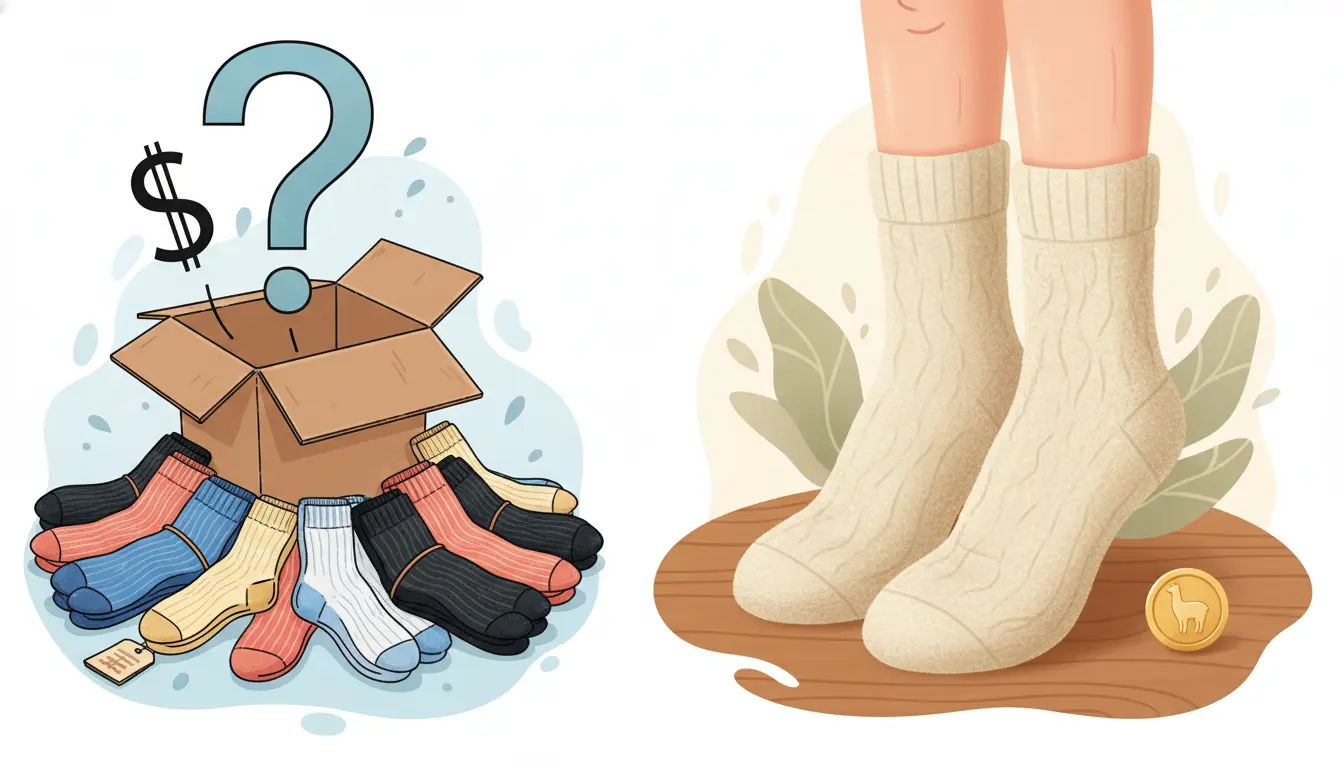
What factors affect alpaca socks price?
Several variables contribute to the final price tag of an alpaca product. Unlike mass-produced cotton, alpaca fiber is a rare commodity harvested only once a year. Understanding these factors helps justify the investment:
- Fiber Grade: Not all alpaca fiber is equal. "Baby Alpaca" refers to the finest parts of the fleece (usually from the chest), measuring between 21 to 23 microns. The finer the micron, the softer the sock, and the higher the price.
- Sourcing and Ethics: At ClassicAlpaca, we prioritize ethical sourcing from the Andean highlands. Supporting fair trade practices and sustainable farming in Peru adds to the cost but ensures a product you can feel good about wearing.
- Manufacturing Complexity: Technical socks—such as those with arch support, reinforced heels, and mesh ventilation zones—require specialized knitting machinery and longer production times than basic tubes.
- Blend Ratio: The more alpaca fiber used, the more expensive the sock becomes. A 70% alpaca blend will naturally cost more than a 15% blend, but it will also perform significantly better in terms of warmth and moisture management.
Why are alpaca socks more expensive than regular socks?
The alpaca socks price is a reflection of scarcity and performance. While cotton is grown in massive industrial plantations worldwide, alpacas live primarily in high-altitude regions of South America. Their population is limited, and the yield of fiber per animal is relatively low.
Beyond scarcity, the physical structure of the fiber is superior to cotton or polyester. Alpaca fibers are hollow, acting as natural insulators that trap heat in the winter and release moisture in the summer. This "intelligent" fiber technology cannot be replicated by cheap synthetics. When you buy a regular cotton sock, you are paying for a commodity. When you buy alpaca, you are paying for a biological masterpiece of engineering.
Are alpaca socks better than wool or cotton socks?
To truly understand the value proposition, a side-by-side comparison is essential. While Merino wool is a formidable competitor, alpaca often comes out on top in terms of softness and thermal efficiency.
| Feature | Cotton | Sheep Wool | Alpaca Wool |
|---|---|---|---|
| Warmth | Low (Cold when wet) | High | Extreme (Higher warmth-to-weight) |
| Moisture Wicking | Poor (Absorbs water) | Good | Excellent |
| Softness | High (Initially) | Can be itchy | Silky (Hypoallergenic) |
| Durability | Moderate | High | Very High |
| Odor Resistance | Low | High | Excellent |
As shown above, the alpaca socks price covers a range of benefits that cotton simply cannot touch. For hikers, athletes, or anyone living in variable climates, the moisture-wicking capability alone prevents blisters and keeps feet dry and odor-free for days.
How long do alpaca socks last?
Longevity is perhaps the strongest argument for the cost. A high-quality pair of alpaca socks can easily outlast three or four pairs of standard cotton socks. Alpaca fiber is remarkably resilient and has a high tensile strength, meaning it doesn't break down or lose its shape as quickly as other materials.
Tips to Maximize Your Investment:
- Wash Cold: Use cold water and a gentle cycle to preserve the fiber's integrity.
- Air Dry: Never put your alpaca socks in a hot dryer. Lay them flat to dry.
- Rotate Pairs: Giving the fibers a day to "rest" between wears allows them to spring back to their original shape.
Because they are naturally antimicrobial, you don't need to wash them after every single wear. Reducing the frequency of washing further extends the life of the garment, making the cost-per-wear significantly lower over time.
Are alpaca socks worth the price for everyday use?
In short: yes. While the initial alpaca socks price is higher, the daily return on investment is felt every time you step into them. Imagine a morning where your feet never feel the bite of the cold, or an afternoon hike where your feet remain perfectly dry despite the exertion. These are the subtle luxuries that improve the quality of life.
For the professional, alpaca dress socks offer a refined silhouette without the bulk of traditional wool. For the adventurer, they offer the security of knowing your feet are protected against the elements. And for the eco-conscious consumer, they offer a sustainable alternative to the plastic-heavy world of synthetic textiles.
"Luxury is not about the price tag; it's about how long the product serves your soul. Alpaca socks are a testament to that philosophy."
When you choose ClassicAlpaca, you aren't just buying a pair of socks; you are embracing a lifestyle of quality, warmth, and Andean tradition. While the alpaca socks price may be higher than what you find at a big-box retailer, the comfort and longevity they provide make them one of the smartest investments you can make for your wardrobe.