
As the mercury drops and the first frost settles across the landscape, the search for ultimate warmth begins at your feet. Investing in a pair of high-quality thick boot socks is not merely a matter of comfort; it is a fundamental requirement for anyone braving the elements. While thin liners might suffice for a brisk autumn walk, the biting chill of a true winter demands a more robust barrier between your skin and the frozen ground. In this guide, we explore why premium insulation and density are the hallmarks of superior winter footwear, ensuring that every step you take is enveloped in refined luxury and enduring warmth.
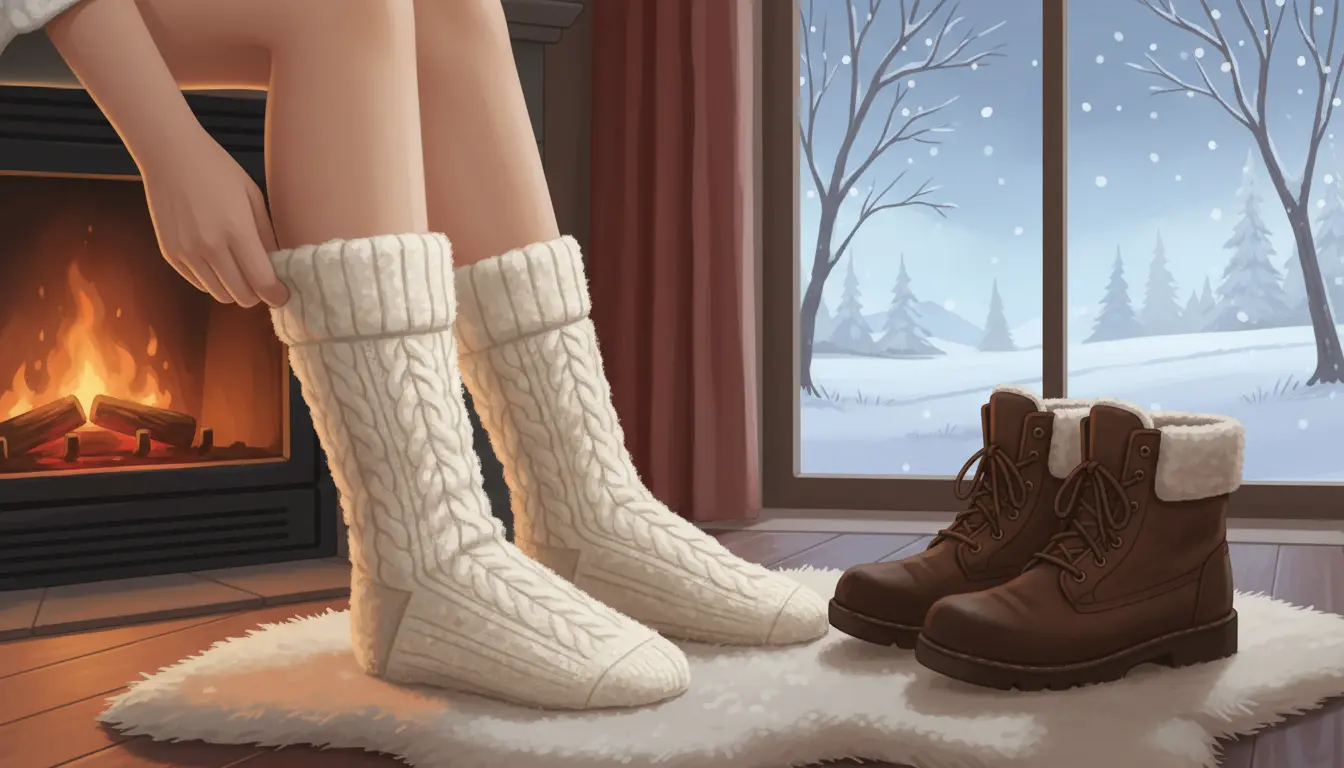
What makes thick boot socks warmer than regular socks
The primary reason why thick boot socks outperform their thinner counterparts lies in the science of insulation. Warmth is not necessarily generated by the fabric itself, but rather by the air that the fabric can trap. Regular socks are often too thin to create a significant thermal barrier; they sit flush against the skin, allowing heat to escape rapidly through conduction.
Furthermore, the physical density of a thick boot sock provides a thicker layer of protection against the cold soles of your boots. Since boots—especially those with rubber or leather soles—can become heat sinks that pull warmth away from your feet, the added thickness acts as a crucial spacer.
Materials commonly used in thick boot socks
Not all thick socks are created equal. The material composition determines whether a sock will merely feel bulky or if it will actually perform under pressure. At ClassicAlpaca, we believe that the source of the fiber is just as important as the knit itself.
- Alpaca Fiber: The gold standard for luxury and performance. Alpaca fiber is naturally hollow, which provides superior thermal insulation compared to sheep’s wool. It is also exceptionally soft, moisture-wicking, and hypoallergenic.
- Merino Wool: A popular choice for outdoor enthusiasts, Merino is known for its fine diameter and ability to regulate temperature, though it may lack the extreme softness of Alpaca.
- Synthetic Blends (Nylon/Spandex): While rarely used alone for warmth, these materials are integrated into high-quality thick boot socks to provide elasticity, durability, and a snug fit that prevents sagging.
- Cotton (To be avoided): Cotton is a poor choice for cold weather. It absorbs moisture and loses all insulating properties when damp, which can lead to dangerously cold feet.
How thick boot socks improve comfort inside boots
Beyond thermal regulation, the physical structure of a thick sock provides an essential layer of cushioning. Boots, particularly heavy-duty winter or hiking boots, are often made of rigid materials designed to withstand snow and ice. This rigidity can lead to pressure points, friction, and eventually, painful blisters.
By wearing thick boot socks, you provide a soft interface that fills the minor gaps between your foot and the boot's interior. This 'custom fit' sensation reduces the movement of the foot inside the boot, which is the primary cause of chafing. Additionally, the extra padding under the heel and ball of the foot acts as a shock absorber, making long winter treks significantly more manageable for your joints.
When thick boot socks are the best choice for outdoor use
There are specific scenarios where choosing anything other than a thick, high-performance sock is a mistake. If you find yourself in any of the following situations, your footwear choice should prioritize density and fiber quality:
How thick boot socks help retain heat in cold conditions
Heat retention is a balance of moisture management and thermal mass. When your feet sweat—even in the cold—that moisture can quickly turn into a chilling agent. High-quality thick boot socks, especially those made from Alpaca, are designed to move moisture away from the skin (wicking) while maintaining their loft.
| Feature | Thick Alpaca Boot Socks | Standard Cotton/Poly Socks |
|---|---|---|
| Thermal Insulation | Exceptional (Hollow fibers) | Minimal |
| Moisture Wicking | High (Hydrophobic properties) | Low (Absorbs water) |
| Cushioning | High Impact Protection | Negligible |
| Heat Retention when Wet | Retains warmth | Becomes cold and heavy |
Choosing the right thick boot socks for winter boots
To maximize the benefits of your thick boot socks, you must ensure they are compatible with your footwear. A common mistake is pairing a very thick sock with a boot that is already tight. This compresses the fibers, collapsing the air pockets and actually making your feet colder by restricting blood circulation.
Thick boot socks vs regular socks in cold weather
The debate between layering multiple thin socks versus wearing one pair of thick socks is often settled in favor of the single thick pair—provided the quality is high. Layering two pairs of regular socks can often lead to bunching and restricted circulation. A single, well-engineered thick boot sock is designed to breathe while providing targeted padding where it is needed most.
Regular socks are designed for breathability in temperate conditions; they are porous and lightweight. In contrast, thick boot socks are a specialized tool for survival and comfort in harsh climates. Transitioning to a dedicated winter sock is an investment in your physical well-being and your ability to enjoy the outdoors regardless of the forecast.
How to care for thick boot socks to keep them durable
Premium socks, especially those made from natural fibers like Alpaca, require thoughtful care to maintain their insulating properties and soft texture. To ensure your thick boot socks last for many seasons, follow these guidelines:
- Gentle Washing: Use cold water and a mild detergent. Avoid bleach or harsh fabric softeners which can break down the natural fibers.
- Air Dry Only: Never put high-quality wool or alpaca socks in the dryer. The high heat can shrink the fibers and destroy the elasticity. Instead, lay them flat to dry.
- Avoid Friction in Storage: Turn your socks inside out when washing to protect the outer finish and prevent pilling.
In conclusion, the transition to thick boot socks is one of the most effective ways to upgrade your winter wardrobe. By choosing the right materials and ensuring a proper fit, you can transform your experience of the cold from one of endurance to one of genuine comfort. At ClassicAlpaca, we pride ourselves on providing the highest quality fibers to keep you warm, stylish, and ready for whatever the season brings.