
When selecting the ultimate performance fabric for your wardrobe, the debate often centers on two of nature's finest gifts: the noble alpaca and the resilient merino sheep. While both are celebrated for their soft hand-feel and thermal properties, understanding how alpaca fiber moisture wicking compared to merino wool functions is essential for the discerning traveler and outdoor enthusiast. For those who demand elegance without compromising on technical performance, alpaca fiber offers a unique cellular structure that redefines our expectations of comfort. In this exploration, we delve into the sophisticated science of these fibers to reveal why alpaca remains the pinnacle of luxury performance wear.
What makes alpaca fiber good at moisture wicking
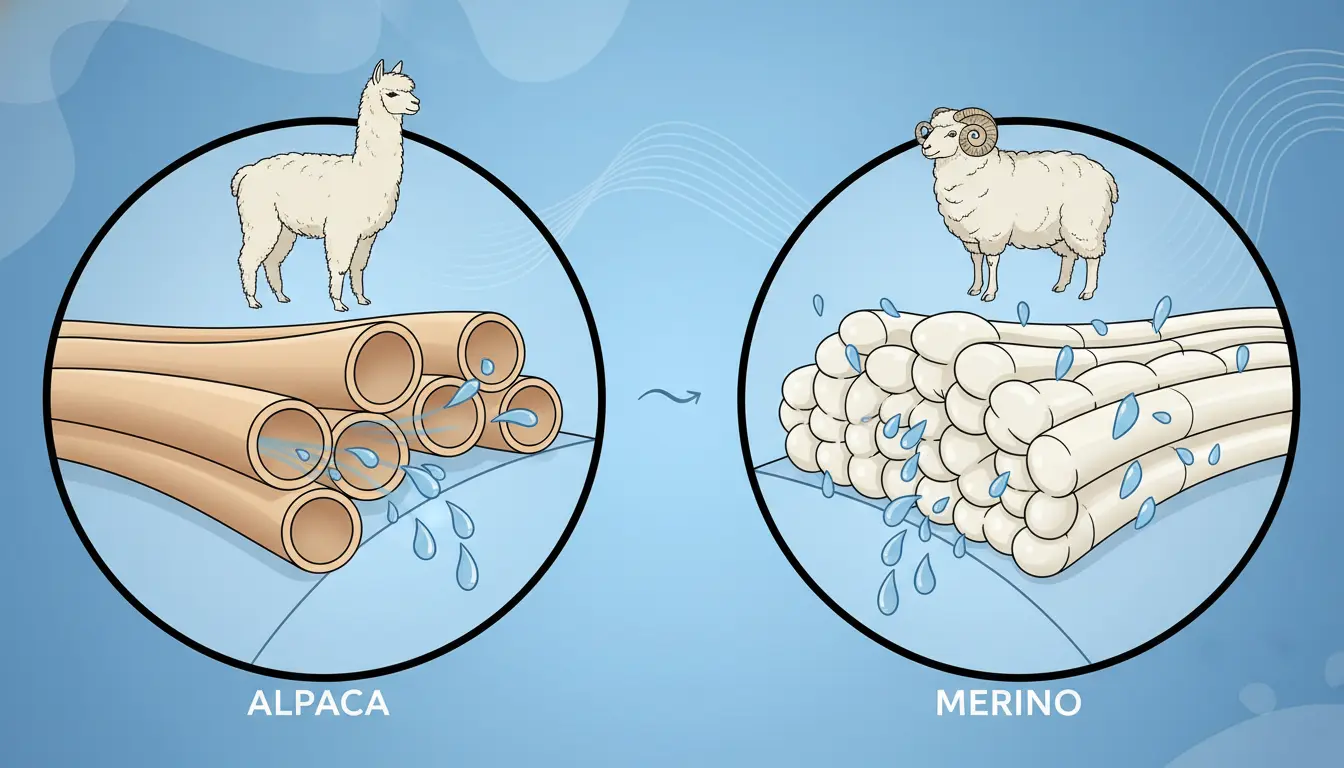
The secret to the alpaca’s legendary comfort lies in its evolutionary history. Originating from the high-altitude, extreme climates of the Andes, these animals developed a fleece that is both lightweight and incredibly efficient at managing moisture. Unlike traditional wool, alpaca fiber is medullated, meaning it possesses a hollow core. This structural trait is the cornerstone of its moisture-wicking prowess.
Instead of absorbing moisture into the center of the fiber—as most natural materials do—alpaca fiber utilizes capillary action. It literally transports moisture along the surface of the fiber, moving it away from the skin and toward the exterior of the garment where it can evaporate quickly. Furthermore, alpaca is naturally hydrophobic, meaning it repels water. When you combine this water-repellent nature with its smooth scales, you get a textile that keeps you dry even during high-intensity movements or in humid environments.
How merino wool manages moisture and sweat
Merino wool has long been the gold standard for performance clothing, and for good reason. It operates through a process known as absorption and desorption. Merino fibers are hydrophilic, meaning they actually attract and absorb moisture into the inner cortex of the fiber—up to 30% of their own weight. This ability to hold moisture within the fiber prevents that "wet" feeling against the skin for a significant period.
As the wool absorbs sweat, it undergoes a chemical reaction called 'heat of sorption,' which releases a small amount of warmth. This is why merino is so popular for base layers in cold, damp conditions. However, because the moisture is stored inside the fiber itself, there is a limit to how much it can hold before the garment begins to feel heavy and saturated. While merino is excellent at buffering humidity, its mechanism is fundamentally different from the rapid transport system found in alpaca.
Key differences in moisture wicking between alpaca fiber and merino wool
The distinction between alpaca fiber moisture wicking compared to merino wool is best understood as a choice between transport and absorption. While merino excels at holding moisture within its core, alpaca excels at moving it away entirely. This leads to several performance variations that affect daily wear and specialized use.
| Feature | Alpaca Fiber | Merino Wool |
|---|---|---|
| Moisture Strategy | Capillary Action (Transport) | Core Absorption (Storage) |
| Fiber Structure | Hollow (Medullated) | Solid Core |
| Water Retention | Low (approx. 8%) | High (up to 30%) |
| Surface Texture | Smooth (Low Scales) | Rougher (Higher Scales) |
| Weight when Wet | Remains Lightweight | Becomes Heavy |
Because alpaca fibers have a much lower moisture retention rate (about 8%) compared to merino, the fabric does not lose its shape or become cumbersome when you begin to sweat. This makes alpaca a superior choice for those who prefer a garment that maintains its silhouette and lightweight feel throughout the day.
Which fiber keeps you drier during physical activity
When you are engaging in physical activity—whether it is a brisk morning hike through a misty forest or a fast-paced urban commute—dryness is the ultimate metric of comfort. Alpaca fiber's ability to move sweat to the surface for evaporation means that your skin remains dry even during peak exertion. It prevents the "clammy" sensation that often occurs when a garment becomes saturated.
Merino wool, while efficient, can reach a saturation point. Once the fiber core is full, the moisture begins to sit on the skin, leading to a cooling effect that may be undesirable in colder climates. In contrast, alpaca’s hydrophobic nature ensures that even if the exterior of the garment gets damp, the part touching your skin stays remarkably dry. For the active luxury lifestyle, this translates to longer periods of uninterrupted comfort.
Drying time: alpaca fiber vs merino wool
In the world of high-end performance wear, drying time is a critical factor. A garment that stays wet for hours can lead to chafing, discomfort, and even hypothermia in extreme conditions. In the head-to-head battle of alpaca fiber moisture wicking compared to merino wool, alpaca is the clear victor in terms of speed.
Because alpaca fibers do not soak up water into their internal structure, there is very little moisture to remove. Once the activity stops, the air circulating through the hollow fibers facilitates rapid evaporation. Merino wool, having locked moisture deep within its cortex, requires significantly more time and energy (heat) to release that water. For the traveler who washes their clothes in a hotel sink or the hiker caught in a sudden downpour, the quick-drying nature of alpaca is a game-changing advantage.
Breathability and temperature regulation in both fibers
Both fibers are master regulators of temperature, acting as natural thermostats for the body. This is achieved through breathability—the ability of the fabric to allow air and moisture vapor to pass through. Merino wool breathes by releasing the moisture it has absorbed as vapor. This is a very effective cooling mechanism in dry heat.
Alpaca, however, leverages its hollow fibers to create a thermal barrier. In cold weather, these hollow spaces trap warm air, providing superior insulation without the bulk. In warm weather, those same channels allow for exceptional breathability, moving hot air and sweat away from the body. This dual-action performance makes alpaca a more versatile year-round fiber, capable of keeping the wearer comfortable across a wider range of temperatures than almost any other natural material.
When alpaca fiber performs better than merino wool
While merino wool is a fantastic material, there are specific scenarios where alpaca fiber is the undisputed choice for the connoisseur:
- High Humidity Environments: Since alpaca doesn't absorb moisture from the air, it won't feel damp and heavy in tropical or coastal climates.
- Sensitive Skin: Alpaca is naturally hypoallergenic and lacks the lanolin found in sheep's wool, which can often cause irritation or "itchiness" when the skin is warm or sweaty.
- Extreme Cold: The insulation provided by the hollow core of alpaca fiber is significantly higher than that of the solid merino fiber.
- Long-term Wear: Because alpaca is more durable and less prone to pilling than merino, it maintains its luxurious appearance even after repeated use in demanding conditions.
Which fiber is better for outdoor and performance clothing
Choosing between these two premium fibers ultimately depends on your specific needs, but for those seeking the ultimate blend of luxury and technical superiority, alpaca is difficult to beat. While merino is excellent for stationary warmth, alpaca’s superior moisture transport, faster drying times, and lighter weight when wet make it the ideal choice for performance clothing.
At ClassicAlpaca, we believe that nature provides the most sophisticated technology. By choosing alpaca, you are not just choosing a fabric; you are investing in a legacy of Andean craftsmanship and a fiber that works in harmony with your body. Whether you are scaling a peak or navigating the demands of a modern lifestyle, the superior moisture management of alpaca ensures you remain dry, warm, and elegantly comfortable.