
When the mercury drops and the winter wind begins its persistent howl, the search for the ultimate thermal layer shifts from heavy outerwear to the foundation of your wardrobe: your feet. If you have ever found yourself shivering despite heavy boots, you have likely asked the question: what are the best winter socks to combat truly freezing temperatures? In the realm of high-end knitwear, the answer lies in the intersection of nature’s finest fibers and innovative textile engineering. While many settle for standard cotton or basic blends, the discerning individual seeks the unparalleled warmth and moisture-wicking capabilities of luxury materials like alpaca and premium wool to ensure every step remains cozy and dry.
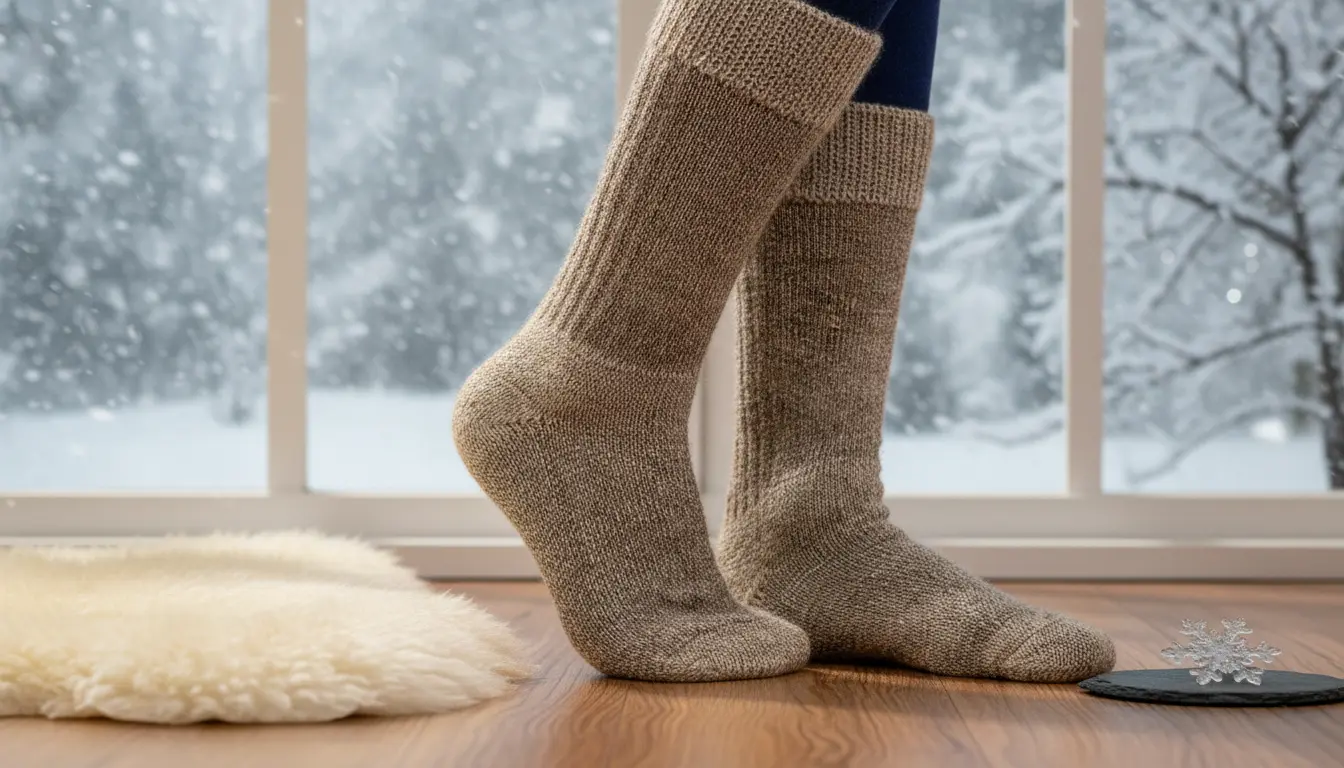
What makes a sock warm enough for freezing temperatures?
Warmth is not merely about thickness; it is about thermal regulation and moisture management. When feet get cold, it is often because perspiration has been trapped against the skin, leading to rapid cooling. To identify what are the best winter socks for extreme conditions, one must look at three critical factors: insulation, breathability, and moisture absorption.
- Thermal Conductivity: The fiber must be able to trap air. Dead air is the best insulator, and fibers with a hollow or crimped structure excel at creating these tiny pockets of warmth.
- Moisture Wicking: Your feet have approximately 250,000 sweat glands. If your socks do not pull moisture away from the skin, you will end up with damp, freezing feet.
- Weight and Density: A higher density of loops (terry lining) provides more cushioning and more area to trap heat without adding unnecessary bulk that compromises circulation.
Alpaca socks for cold weather: why they stand out
When discussing alpaca socks for cold weather, we are referring to a fiber that has been perfected over millennia in the harsh, high-altitude environments of the Andes Mountains. Alpaca fiber is unique because it is semi-hollow. This microscopic structure allows it to trap more heat than almost any other natural fiber, providing a superior warmth-to-weight ratio.
Furthermore, alpaca is significantly more water-repellent than other fibers. While it can wick moisture away, it does not absorb it into the core of the fiber in the same way cotton or even some wools do. This ensures that even if you are trekking through deep snow, your alpaca socks for cold weather will remain light and insulating rather than becoming heavy and sodden.
Are alpaca socks warmer than wool socks in winter?
The short answer is yes. Scientific studies have shown that alpaca fiber can be up to three times warmer than standard sheep’s wool. The secret lies in the medulla—the hollow core of the alpaca hair. This structure acts as a natural thermos, keeping the cold out and the body heat in. Below is a comparison to help you visualize the differences:
| Feature | Alpaca Fiber | Merino Wool |
|---|---|---|
| Insulation | High (Hollow fiber) | Medium (Solid fiber) |
| Softness | Silk-like (Low micron count) | Soft (Scaly texture) |
| Moisture Management | Superior (Low absorption) | Good (High absorption) |
| Durability | Very High | High |
| Lanolin Content | None (Hypoallergenic) | Present |
While Merino wool is a fantastic material, it relies on its "crimp" to trap air. Over time and through many washes, this crimp can flatten. Alpaca’s insulating properties are structural, meaning they last for the lifetime of the garment. When you choose the best winter socks, you are investing in long-term performance.
Best men’s wool socks for winter: pros and cons
For many years, the gold standard for masculine outdoor wear has been wool. When searching for the best mens wool socks for winter, most consumers gravitate toward Merino. It is a reliable choice, but it is important to understand both its strengths and its limitations in a luxury context.
Pros:
- Accessibility: High-quality wool socks are widely available and come in various styles from dress socks to hiking boot liners.
- Elasticity: Wool has a natural springiness that helps socks maintain their shape around the calf and arch.
- Odor Resistance: Like alpaca, wool has natural antimicrobial properties that prevent the buildup of bacteria.
Cons:
- Prickle Factor: Even fine Merino can occasionally cause itching for those with sensitive skin due to the microscopic scales on the fiber.
- Drying Time: Wool can hold a significant amount of its weight in water, which means if they do get wet, they take much longer to dry than alpaca.
- Bulk: To achieve the same warmth as a medium-weight alpaca sock, a wool sock often needs to be much thicker, which can make shoes feel tight and restrict circulation.
While the best mens wool socks for winter are certainly a massive upgrade over synthetic or cotton alternatives, they often serve as a secondary choice for those who have experienced the elevated comfort of an alpaca blend.
How to choose the best winter socks for your needs
Selecting the right pair involves more than just picking the thickest option on the shelf. To truly solve the problem of freezing feet, consider the following lifestyle factors:
For Active Pursuits
If you are skiing, hiking, or working outdoors, look for a technical blend. A mix of alpaca or wool with a small percentage of nylon and spandex provides the durability and stretch needed for high-impact movement while maintaining heat.
For Everyday Luxury
For office wear or lounging at home, a finer gauge knit is preferable. You can still find alpaca socks for cold weather that are thin enough to fit into leather oxfords or loafers while providing a shield against the morning chill.
Pay close attention to the cuff and arch support. A sock that slides down or bunches at the toes creates friction and discomfort. The best winter socks will feature a reinforced heel and toe, as these are the areas prone to the most wear and tear. Furthermore, ensure the fit is snug but not restrictive; if a sock is too tight, it compresses the insulating air pockets and restricts blood flow, which actually makes your feet colder.
In conclusion, while the market is flooded with options, the discerning choice for those battling freezing feet is clear. By prioritizing high-performance natural fibers—specifically alpaca—you ensure that your winter wardrobe is as functional as it is refined. Whether you are looking for the best mens wool socks for winter or the sophisticated softness of alpaca, investing in quality hosiery is the first step toward a comfortable, elegant winter season. Do not let the cold dictate your day; wrap your feet in the warmth they deserve.