
When the temperature drops and the frost begins to settle, the search for the perfect pair of socks becomes more than just a matter of fashion—it becomes a quest for survival and comfort. For decades, sheep’s wool has been the gold standard for winter gear, but a more refined, luxurious alternative has been quietly claiming the throne. Many enthusiasts of natural fibers often find themselves asking: are alpaca socks warmer than wool? The answer lies in the remarkable biological evolution of the alpaca, a creature that thrives in the extreme altitudes of the Andes. Not only are alpaca socks warm, but they also offer a sophisticated blend of thermal regulation and moisture management that standard wool simply cannot match.
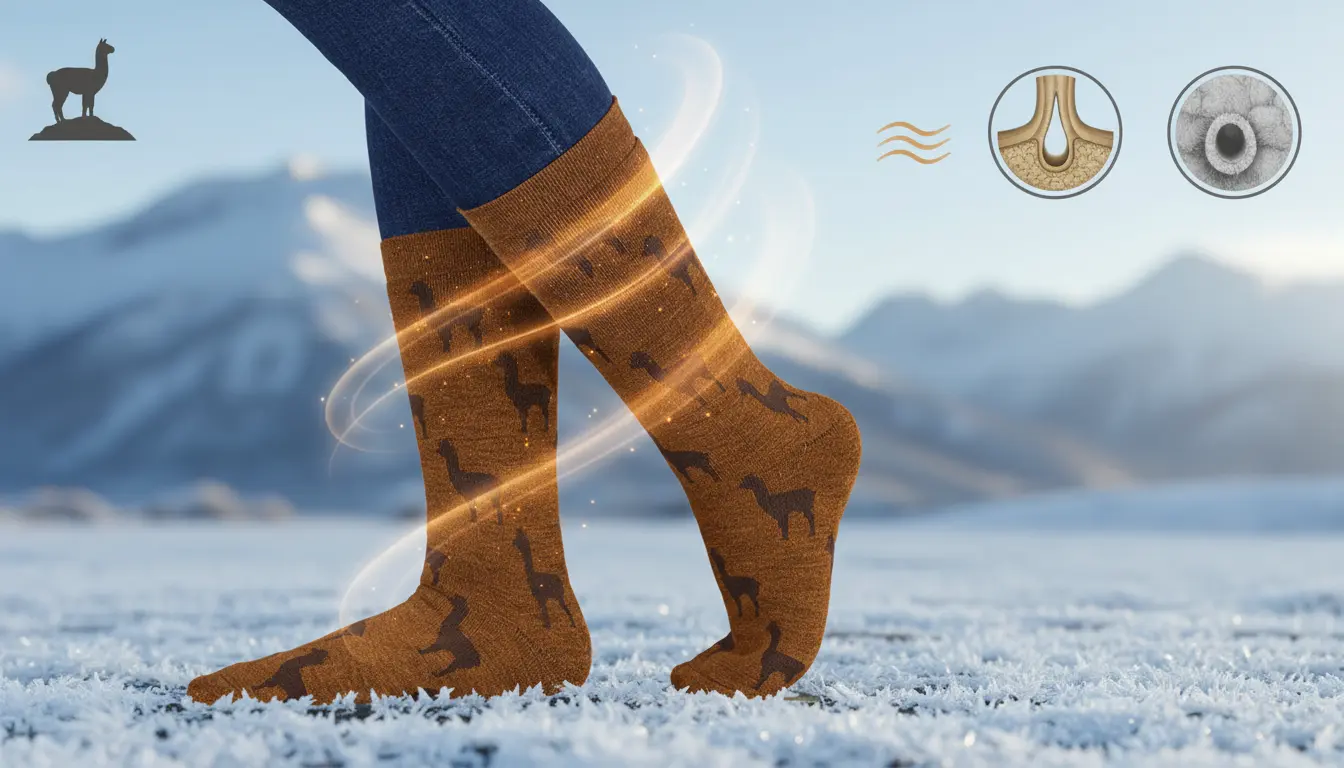
Are alpaca socks warm? How alpaca fiber retains heat
To understand the exceptional warmth of alpaca fiber, we must look at the microscopic architecture of the hair itself. Unlike the solid structure of sheep’s wool, alpaca fiber is medullated, meaning it possesses a hollow core. This central cavity acts as a natural thermos, trapping pockets of air that serve as a powerful insulating barrier against the cold. When you ask yourself, "are alpaca socks warm?" consider that this specific trait allows the fiber to retain heat significantly more efficiently than solid fibers.
This unique hollow-core structure isn't just a happy accident; it is an evolutionary necessity. Alpacas live at altitudes where temperatures can swing from freezing nights to scorching afternoons. Their fleece must be versatile enough to protect them from both extremes. For the wearer of an alpaca sock, this means that the fiber creates a micro-climate around the foot, maintaining a steady, comfortable temperature regardless of the external environment. This thermal capacity is often cited as being up to three times greater than that of standard sheep's wool, making it a premier choice for those who demand the very best in winter performance.
The Science of Air Pockets
The air trapped inside each alpaca fiber doesn't just provide warmth; it also contributes to the fiber's incredible lightweight feel. You get more insulation with less bulk, which is why a thin pair of alpaca dress socks can often feel significantly warmer than a thick, heavy wool alternative.
Alpaca socks vs wool socks: warmth comparison
When conducting a direct alpaca socks vs wool socks warmth comparison, the metrics lean heavily in favor of the South American camelid. While Merino wool is celebrated for its softness and decent insulation, it lacks the thermal efficiency of alpaca. Sheep's wool relies on its natural crimp to create air pockets between the fibers, but the fibers themselves are solid. In contrast, alpaca fiber provides insulation both between the fibers and inside the fibers.
Furthermore, the physical texture of the fiber plays a role in how we perceive warmth. Alpaca fibers are smoother and lack the microscopic scales (called cuticles) found on sheep’s wool. These scales can cause the "prickle factor," which leads to itching and discomfort. When a sock is comfortable and sits closer to the skin without irritation, it more effectively maintains the body's natural heat. This is a crucial differentiator when debating if are alpaca socks warmer than wool; the comfort level directly impacts the perceived warmth and overall experience of the wearer.
| Feature | Alpaca Fiber | Merino Wool |
|---|---|---|
| Fiber Structure | Hollow (Medullated) | Solid |
| Insulation Rating | Highest (3x warmer than wool) | High |
| Moisture Absorption | Low (Hydrophobic) | High (Hydrophilic) |
| Wicking Ability | Excellent (Capillary action) | Good |
| Weight-to-Warmth | Superior | Standard |
Why alpaca socks feel warmer without overheating
One of the most common complaints about heavy winter socks is the dreaded "sweaty foot" syndrome. This occurs when a material provides insulation but lacks breathability, causing moisture to build up against the skin. Interestingly, the reason why alpaca socks are warmer than wool in practice is because they keep the feet dry. Wet skin loses heat 25 times faster than dry skin, so moisture management is the secret ingredient to true warmth.
Alpaca fiber is naturally hydrophobic, meaning it repels water. Instead of soaking up sweat like a sponge, alpaca fibers use capillary action to wick moisture away from the skin and move it to the outer surface of the sock where it can evaporate. This ensures that even if you are active—whether walking through a city or hiking a trail—your feet stay dry. By keeping the skin dry, the alpaca fiber preserves the body’s natural heat much more effectively than wool, which can hold up to 30% of its weight in moisture before it starts to feel damp.
Warmth in cold and wet conditions: alpaca vs wool
In real-world winter scenarios, conditions are rarely just "cold." They are often wet, slushy, and unpredictable. This is where the debate over whether are alpaca socks warmer than wool truly reaches its conclusion. Traditional wool, while warm when dry, loses much of its insulating power when it becomes saturated with water. The fibers can become heavy and lose their loft, which collapses the air pockets that provide warmth.
Alpaca fiber, however, maintains its structural integrity even when damp. Because the insulation is built into the core of the fiber itself, it doesn't matter if the sock gets a little wet; the hollow centers remain as air-filled chambers of warmth. This makes alpaca socks the ultimate choice for outdoor enthusiasts, skiers, and commuters who might find themselves stepping into a deep snowbank or dealing with humid winter air.
Additionally, alpaca fiber is naturally hypoallergenic because it contains no lanolin (the oil found in sheep's wool). This means it doesn't require harsh chemical processing to clean, preserving the natural strength and thermal properties of the fiber. When you choose alpaca, you are choosing a fiber that is as close to nature's original design as possible, optimized for performance in the harshest environments on Earth.
Which is warmer for you: alpaca or wool socks?
Ultimately, the choice between alpaca and wool depends on your lifestyle and your specific needs for comfort. If you are looking for the absolute peak of thermal efficiency, the scientific evidence and the testimonials of thousands of satisfied wearers point toward alpaca. If you find yourself constantly asking "are alpaca socks warm enough for my specific climate?" the answer is almost certainly a resounding yes.
For the luxury-conscious individual, alpaca represents a step up in both performance and aesthetics. It offers a silky-soft texture that rivals cashmere but with the durability required for everyday wear. Whether you are lounging by a fireplace in the mountains or navigating the urban winter landscape, alpaca provides a level of warmth that is never suffocating, always dry, and consistently superior to traditional wool.
- Daily Commuters: Choose alpaca for warmth without the bulk, allowing you to wear your favorite boots or dress shoes.
- Outdoor Adventurers: Rely on alpaca's moisture-wicking and wet-weather performance for long days in the elements.
- At-Home Comfort: Enjoy the hypoallergenic softness of alpaca for a cozy, itch-free lounging experience.
At ClassicAlpaca, we believe that luxury should serve a purpose. Our collection of alpaca socks is designed to harness these natural wonders, providing you with a product that isn't just a piece of clothing, but a masterpiece of natural engineering. When the question is whether are alpaca socks warmer than wool, the answer is found in every warm, dry, and incredibly soft step you take.