
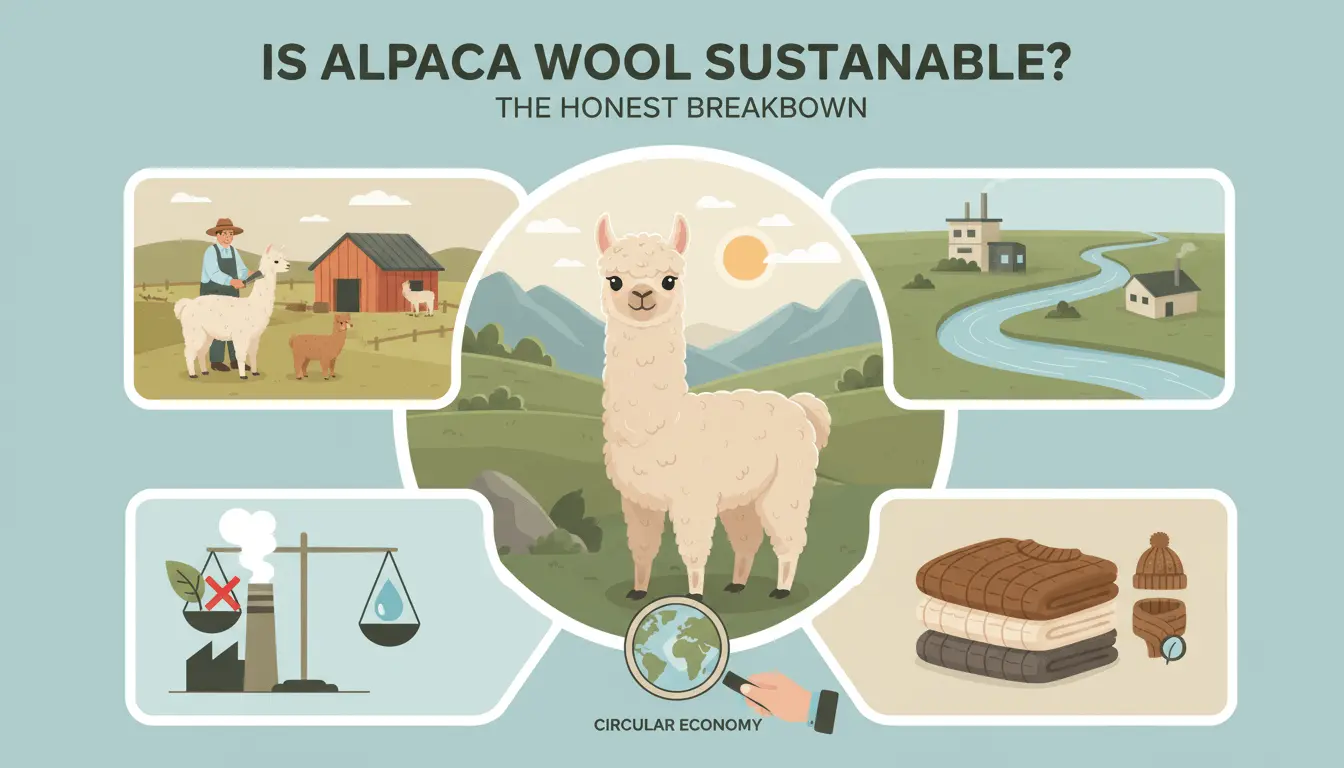
The global fashion industry is at a crossroads. As consumers become increasingly aware of the environmental devastation caused by fast fashion, the demand for eco-friendly alternatives has skyrocketed. Among the myriad of choices, one material has consistently risen to the top of the conversation: alpaca wool. But is alpaca wool sustainable? To answer this, we need to move beyond marketing slogans and look at the honest breakdown of how this fiber is produced, processed, and utilized. Investing in sustainable alpaca clothing is often presented as a badge of eco-conscious honor, yet understanding the intricacies of its footprint is essential for any truly responsible shopper. In this guide, we will peel back the layers of alpaca farming to determine if it truly is the gold standard for the future of fashion.
What makes alpaca wool a sustainable material?
The sustainability of alpaca wool begins with the biology of the animal itself. Unlike sheep, alpacas do not produce lanolin—a natural oil that requires harsh chemical detergents to remove during the scouring process. This means that the cleaning of alpaca fiber is significantly more environmentally friendly, often requiring only mild, biodegradable soaps and less water. Furthermore, alpacas come in over 22 natural shades, ranging from pure white and soft fawns to deep browns and charcoal blacks. This incredible natural variety allows manufacturers to create a wide palette of sustainable alpaca clothing without the need for synthetic dyes, which are notorious for polluting waterways with heavy metals and toxic chemicals. By eliminating the dyeing stage, the energy consumption and chemical output of the production cycle are drastically reduced.
Another biological advantage is the fiber's structure. Alpaca wool is semi-hollow, which gives it exceptional thermal properties. This allows for the creation of lightweight garments that provide superior warmth, reducing the amount of raw material needed to create a high-performance sweater. Because the fiber is naturally moisture-wicking and odor-resistant, garments made from this wool require less frequent washing throughout their lifespan. This lower maintenance requirement further reduces the consumer's water and energy footprint, making the material sustainable not just in its creation, but in its daily use.
Environmental impact of alpaca farming
When evaluating the environmental impact of any livestock, we must look at how they interact with the land. Alpacas are native to the high altitudes of the Peruvian Andes, where they have lived in harmony with the ecosystem for thousands of years. Unlike cattle or goats, which have hard hooves that compact the soil and lead to erosion, alpacas have soft, padded feet. These pads are gentle on the fragile Andean terrain, allowing the grass to remain healthy and preventing the desertification that often follows intensive sheep or goat farming. This regenerative aspect of their presence makes them one of the most low-impact livestock species on the planet.
Furthermore, their eating habits are inherently sustainable. Alpacas are "top-grazers"; they nibble on the tops of grasses and plants rather than pulling them out by the roots. This allows the vegetation to regrow quickly, maintaining the carbon-sequestering potential of the soil. Their efficiency in water consumption is also noteworthy. Alpacas require significantly less water than most other fiber-producing animals, making them ideal for regions where water scarcity is a concern. When we look at the holistic impact, alpaca farming supports biodiversity rather than destroying it, provided the herds are managed at a density that the land can naturally support.
Alpaca wool vs other fabrics: sustainability comparison
To truly understand the value of sustainable alpaca clothing, we must compare it to its closest competitors: cashmere, sheep wool, and synthetic fibers. Cashmere has long been the pinnacle of luxury, but its popularity has led to an environmental crisis. The massive increase in goat populations in Mongolia has caused overgrazing, leading to the desertification of nearly 70% of the Mongolian grasslands. Alpacas, by contrast, produce much more fiber per animal than goats, meaning fewer animals are needed to meet market demand. This efficiency makes alpaca a far more ecological choice for luxury knitwear.
Compared to traditional sheep wool, alpaca fiber is stronger and more durable, which contributes to its longevity. While sheep farming is a significant source of methane emissions, studies suggest that alpacas have a more efficient digestive system that produces lower levels of greenhouse gases per pound of fiber. Finally, when compared to synthetic materials like polyester or acrylic, alpaca wool is a clear winner. Synthetics are derived from petroleum and shed microplastics into our oceans with every wash. Alpaca wool is a 100% natural, biodegradable protein fiber. At the end of its long life, an alpaca garment can be composted, returning nutrients to the earth rather than sitting in a landfill for centuries.
Is alpaca clothing ethical and cruelty-free?
Ethics is a cornerstone of sustainability. In the case of alpaca wool, the shearing process is a vital part of animal welfare. Because alpacas do not shed their fleece naturally, they must be shorn annually to prevent them from overheating during the summer months and to protect them from skin infections or parasite infestations. For the Andean communities that have raised these animals for generations, shearing is a traditional ritual performed with care. Most sustainable alpaca clothing brands now adhere to strict standards, such as the Responsible Alpaca Standard (RAS), which ensures that animals are treated with respect, handled gently, and provided with a healthy environment.
Moreover, the alpaca industry provides a vital economic lifeline for over a million small-scale farmers in the Peruvian highlands. By choosing ethical alpaca brands, consumers are supporting an indigenous heritage and helping to preserve a way of life that is inherently tied to the land. Unlike the industrial-scale factory farming seen in other sectors, alpaca farming is largely decentralized and community-based, which fosters a more transparent and humane supply chain. When you buy a garment made from this fiber, you are often supporting a system that prioritizes both the animal and the artisan.
Durability and slow fashion: why alpaca clothing lasts longer
One of the most sustainable things we can do as consumers is buy less and keep what we have for longer. This is where sustainable alpaca clothing truly shines. Alpaca fiber is remarkably resilient; it has a high tensile strength and does not pill as easily as cashmere or Merino wool. This means that an alpaca sweater can remain in pristine condition for decades if properly cared for. The fibers are naturally elastic and have a great "memory," meaning the garment will hold its shape even after years of wear. In the context of the "slow fashion" movement, alpaca wool is a hero material.
Because the wool is naturally resistant to moths and does not easily absorb odors, it requires less maintenance, which prevents the wear and tear associated with frequent laundering. Many families in the Andes pass down alpaca ponchos through generations, a testament to the fiber's incredible durability. When we factor in the "cost per wear," alpaca clothing becomes an economical and ecological investment. By choosing one high-quality alpaca piece over five cheap synthetic alternatives, you are significantly reducing your personal contribution to textile waste.
Is sustainable alpaca clothing really eco-friendly?
In conclusion, while no manufacturing process is entirely without a footprint, alpaca wool is undeniably one of the most sustainable options available today. The combination of the animal's low-impact grazing habits, the lack of harsh chemical processing, and the extreme durability of the final product creates a compelling case for its eco-friendly status. However, consumers should still remain vigilant. To ensure your purchase is as green as possible, look for brands that prioritize transparency, use natural or low-impact dyes, and support fair trade practices in Peru.
Sustainable alpaca clothing represents more than just a fashion choice; it represents a return to a more balanced relationship with nature. By valuing quality over quantity and natural harmony over industrial exploitation, the alpaca industry offers a blueprint for what a responsible fashion future could look like. Whether you are looking for warmth, luxury, or a clear conscience, alpaca wool provides an honest, sustainable solution that stands the test of time.